Your browser is out of date and may not support some of the features of this webpage. Please consider updating your browser or using another.
The Murder of People with Disabilities
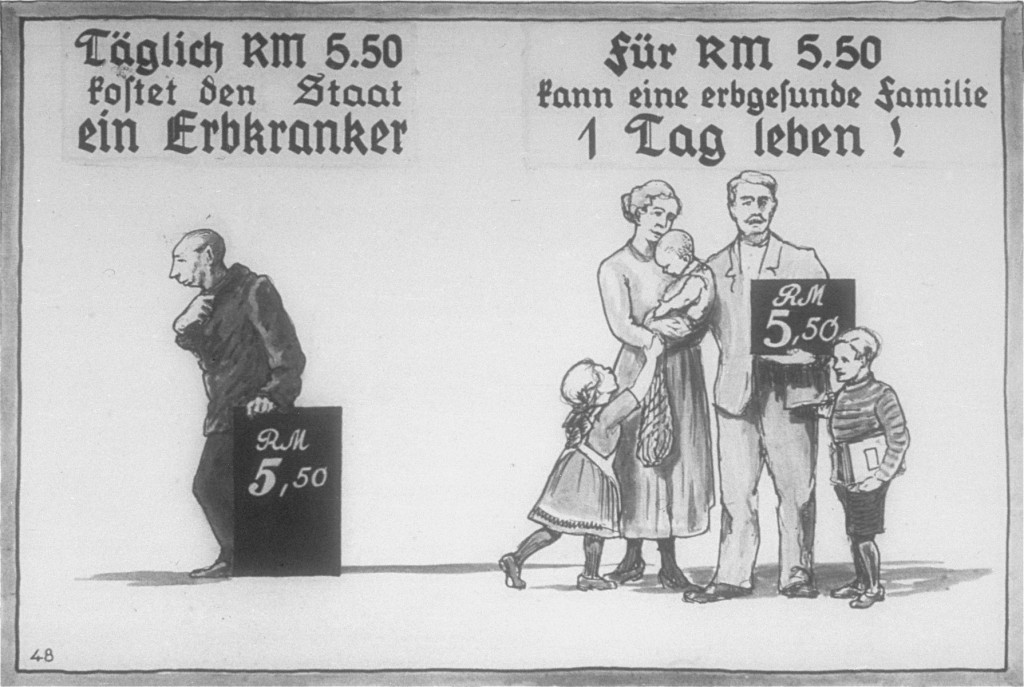
The Nazis saw people with disabilities as an obstacle in their attempts to create an idealized "German race." In 1939, the Nazi regime began a systematic program to murder them.
The so-called Nazi Euthanasia Program targeted for murder Germans with mental and physical disabilities. It claimed the lives of an estimated 250,000 people.
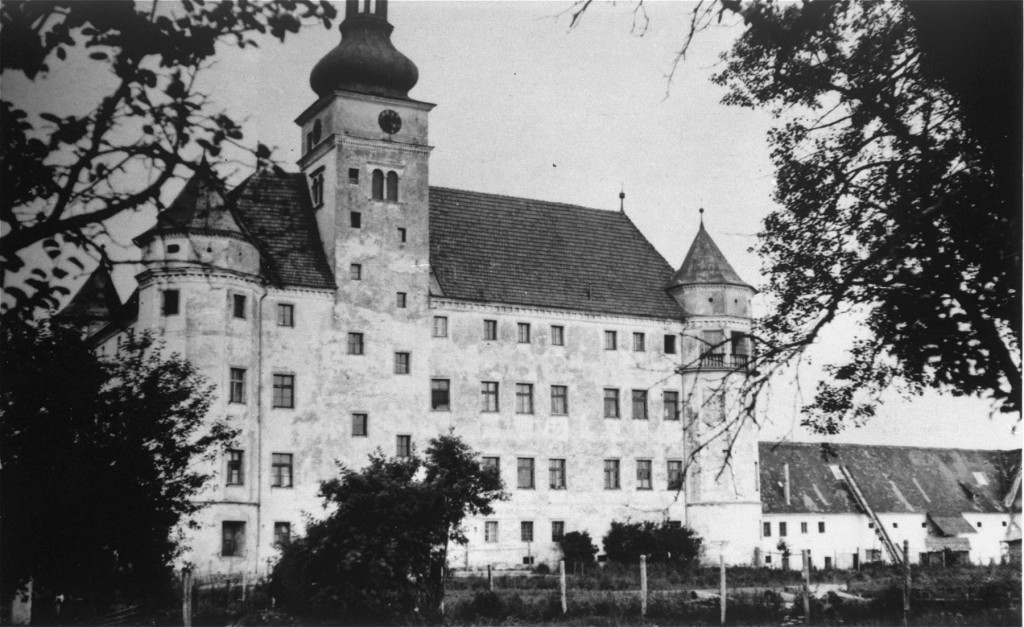
Hartheim castle, a “euthanasia” killing center where people with physical and mental disabilities were killed by gassing and lethal injection. Hartheim, Austria, date uncertain.
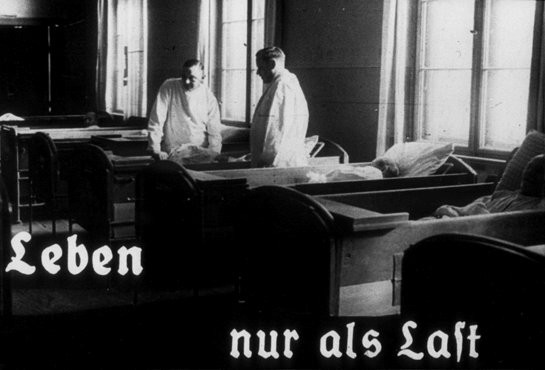
This photo originates from a film produced by the Reich Propaganda Ministry. It shows two doctors in a ward in an unidentified asylum. The existence of the patients in the ward is described as "life only as a burden." Such propaganda images were intended to develop public sympathy for the Euthanasia Program.
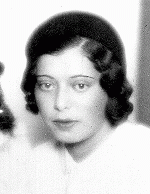
The elder of two daughters born to a Jewish father and a Catholic mother, Helene was raised as a Catholic in Vienna. Her father died in action during World War I when Helene was just 5 years old, and her mother remarried when Helene was 15. Known affectionately as Helly, Helene loved to swim and go to the opera. After finishing her secondary education she entered law school.
1933-39: At 19 Helene first showed signs of mental illness. Her condition worsened during 1934, and by 1935 she had to give up her law studies and her job as a legal secretary. After losing her trusted fox terrier, Lydi, she suffered a major breakdown. She was diagnosed as schizophrenic, and was placed in Vienna's Steinhof Psychiatric Hospital. Two years later, in March 1938, the Germans annexed Austria to Germany.
1940: Helene was confined in Steinhof and was not allowed home even though her condition had improved. Her parents were led to believe that she would soon be released. Instead, Helene's mother was informed in August that Helene had been transferred to a hospital in Niedernhart, just across the border in Bavaria. In fact, Helene was transferred to a converted prison in Brandenburg, Germany, where she was undressed, subjected to a physical examination, and then led into a shower room.
Helene was one of 9,772 persons gassed that year in the Brandenburg “euthanasia” center. She was officially listed as dying in her room of "acute schizophrenic excitement."
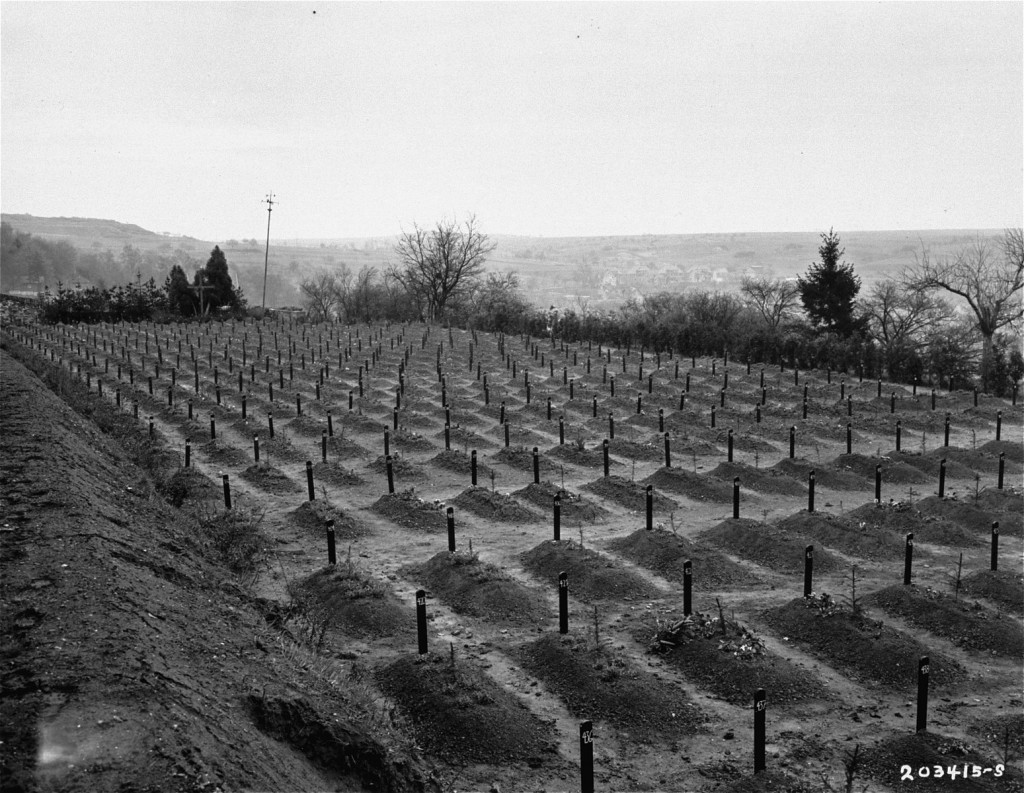
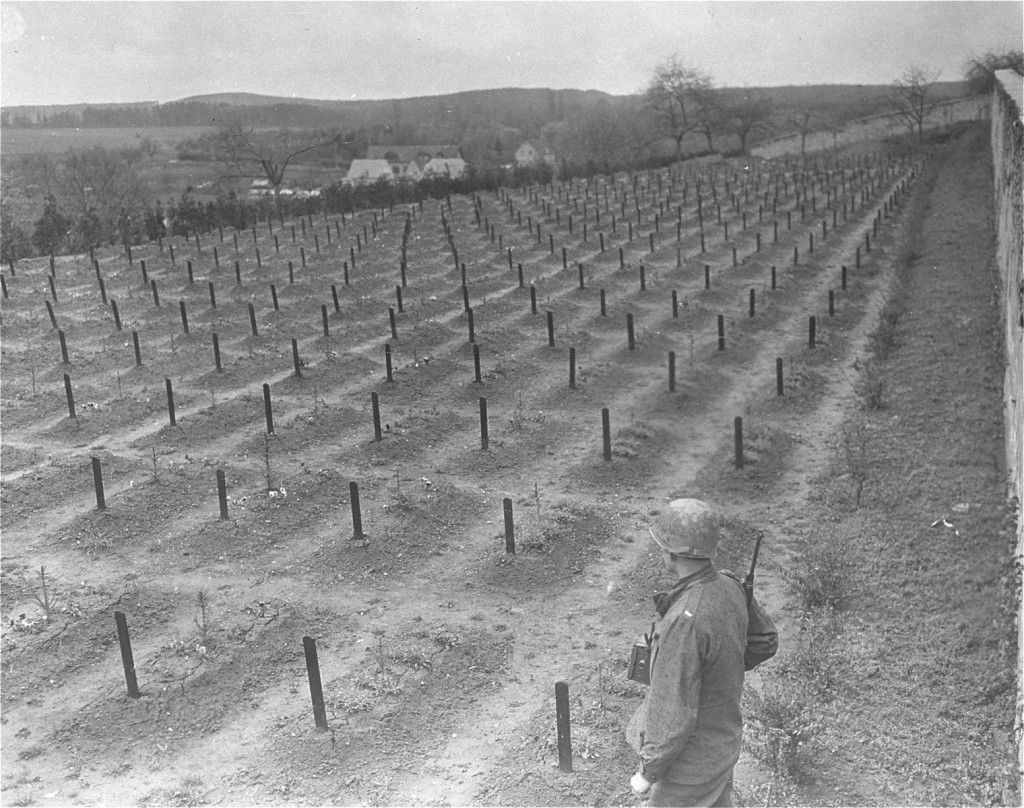
A US Army soldier views the cemetery at Hadamar, where victims of the Nazi euthanasia program were buried in mass graves. This photograph was taken by an American military photographer soon after the liberation. Germany, April 5, 1945.
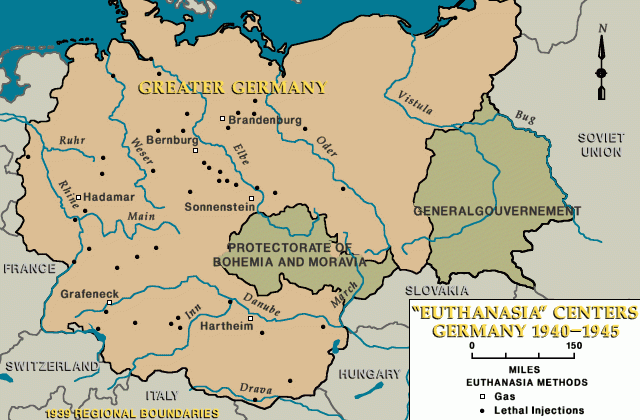
In Nazi usage, “euthanasia” referred to the systematic killing of those Germans whom the Nazis deemed "unworthy of life" because of alleged genetic diseases or defects. Beginning in the fall of 1939, gassing installations were established at Bernburg, Brandenburg, Grafeneck, Hadamar, Hartheim, and Sonnenstein. Patients were selected by doctors and transferred from clinics to one of these centralized gassing installations and killed. After public outrage forced an end to centralized killings, doctors instead administered lethal injections to those selected for “euthanasia” in clinics and hospitals throughout Germany. In this way, the Euthanasia Program continued and expanded until the end of World War II.
Many Germans did not want to be reminded of individuals who did not measure up to their concept of a "master race" and were considered "unfit" or "handicapped." People with physical and mental disabilities were viewed as "useless" to society, a threat to Aryan genetic purity, and, ultimately, "unworthy of life." At the beginning of World War II, individuals with mental or physical disabilities were targeted for murder in what the Nazis called the "T-4," or "euthanasia," program.
The Euthanasia Program required the cooperation of many German doctors, who reviewed the medical files of patients in institutions to determine which individuals with disabilities should be killed. The doctors also supervised the actual killings. Doomed patients were transferred to six institutions in Germany and Austria, where they were killed in specially constructed gas chambers. Infants and small children with disabilities were also killed by injection with a deadly dose of drugs or by starvation. The bodies of the victims were burned in large ovens called crematoria.
Despite public protests in 1941, and Adolf Hitler officially ending the program, the Nazi leadership continued this program in secret throughout the war. At least 250,000 people with disabilities were murdered between 1939 and 1945.
The T-4 program became the model for the mass murder of Jews, Roma (Gypsies), and others in camps equipped with gas chambers that the Nazis would open in 1941 and 1942. The program also served as a training ground for SS members who manned these camps.
Last Edited: Apr 23, 2026
Author(s):
United States Holocaust Memorial Museum, Washington, DC
We would like to thank Crown Family Philanthropies, Abe and Ida Cooper Foundation, the Claims Conference, and BMF for supporting the ongoing work to create content and resources for the Holocaust Encyclopedia.
View the list of all donors.